

Digitize Today, Dominate Tomorrow
-
 Send Us Mail
 -
 Call 24/7 Hours
+91 9277 802030

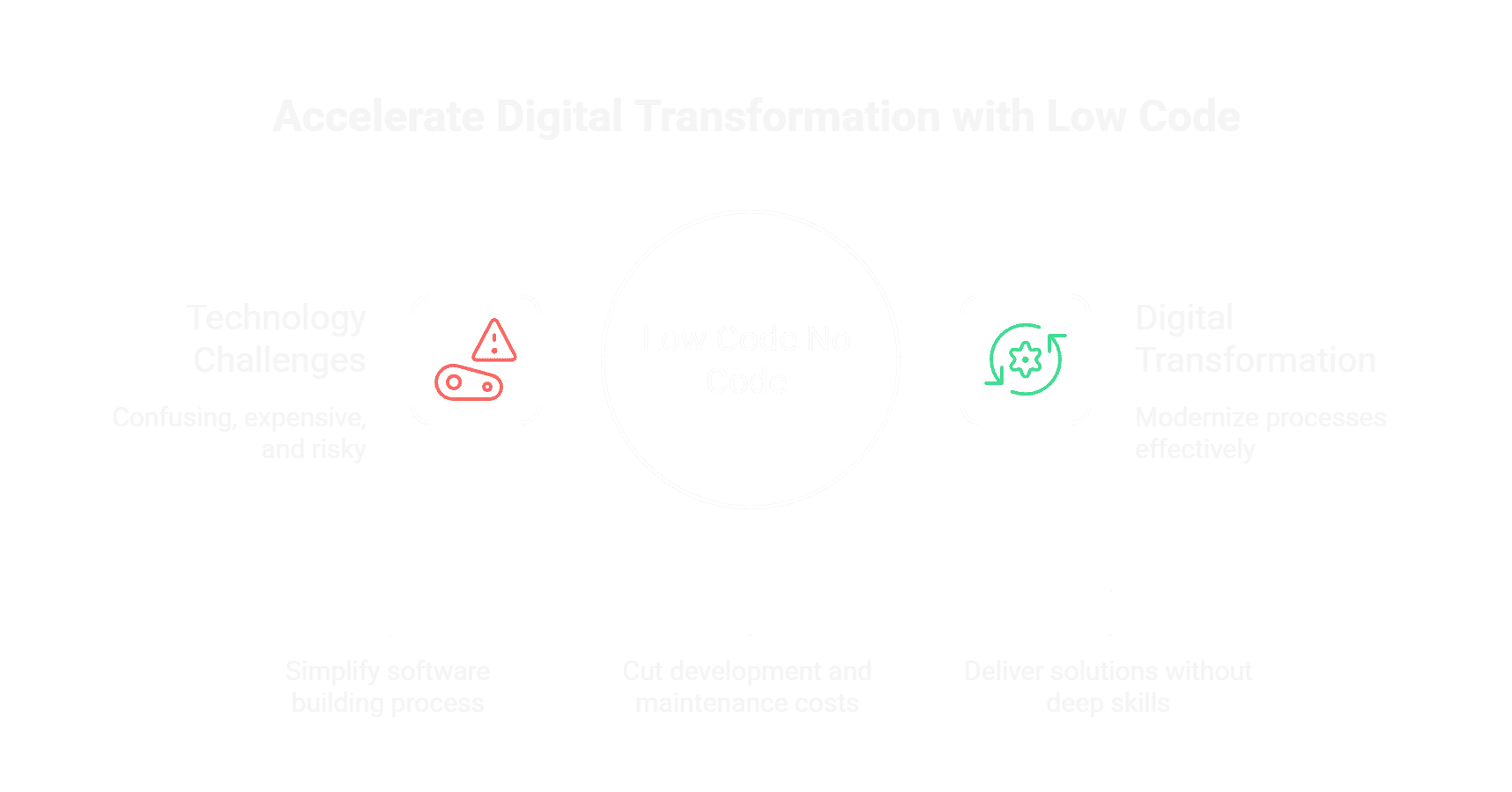
In today’s fast-changing business world, technology is no longer optional it is essential. But for many small business owners, technology feels confusing, expensive, and risky. On the other hand, CTOs and IT leaders are under constant pressure to deliver faster while cutting costs.
This is where Low Code No Code comes in.
These modern development approaches are changing how software is built. They reduce complexity, save money, and help businesses move faster without deep technical skills. More importantly, they play a major role in Digital Transformation, helping organizations modernize processes without overwhelming their teams.
In this blog, we will break everything down in very simple terms what it means, how it works, real use cases, pros and cons, and the best platforms available today.
LCNC refers to software development methods that allow users to create applications with minimal or no traditional coding.
Low code tools require some coding but much less than traditional development. They are ideal for IT teams and developers who want speed and flexibility.
No code tools require zero coding. They are designed for business users, often called a citizen developer, who can build apps using a drag-and-drop interface and visual programming.
Both approaches rely heavily on:
According to Gartner, by 2025, 70% of new applications will be built using low code or no code technologies, up from less than 25% in 2020.
Another Forrester report states that no-code platforms are growing at over 40% year-over-year, making them one of the fastest-growing segments in software development.
Why? Because businesses want:

If technology feels intimidating, these platforms are built for you. You can:
For CTOs, Low Code No Code helps:
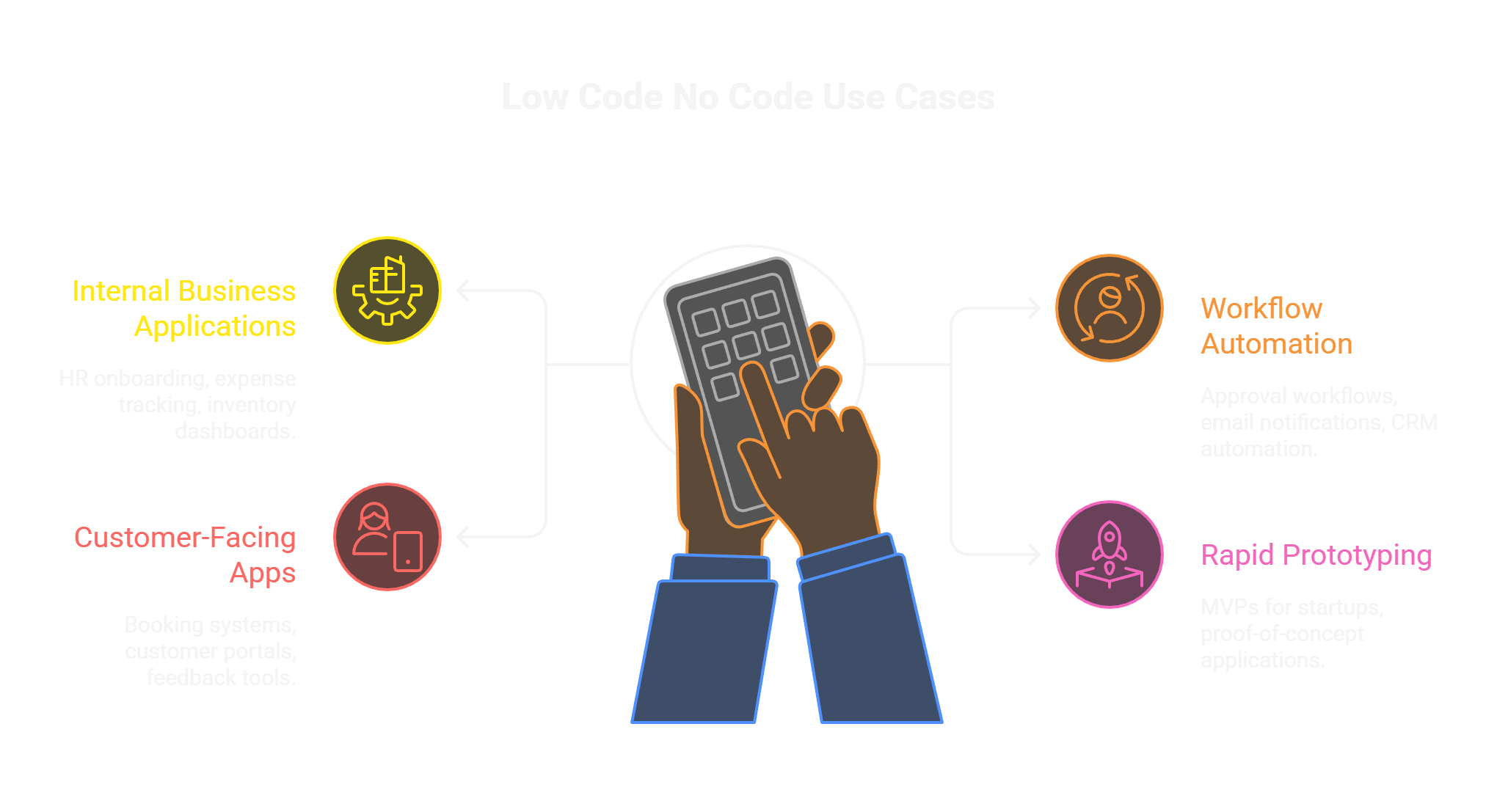
Here are real-world examples where these platforms shine:
These platforms are considered the best because they balance ease of use, scalability, and strong community support.
Digital Transformation is not just about technology it’s about changing how businesses operate. Low Code No Code enables:
This makes them powerful enablers of long-term growth.
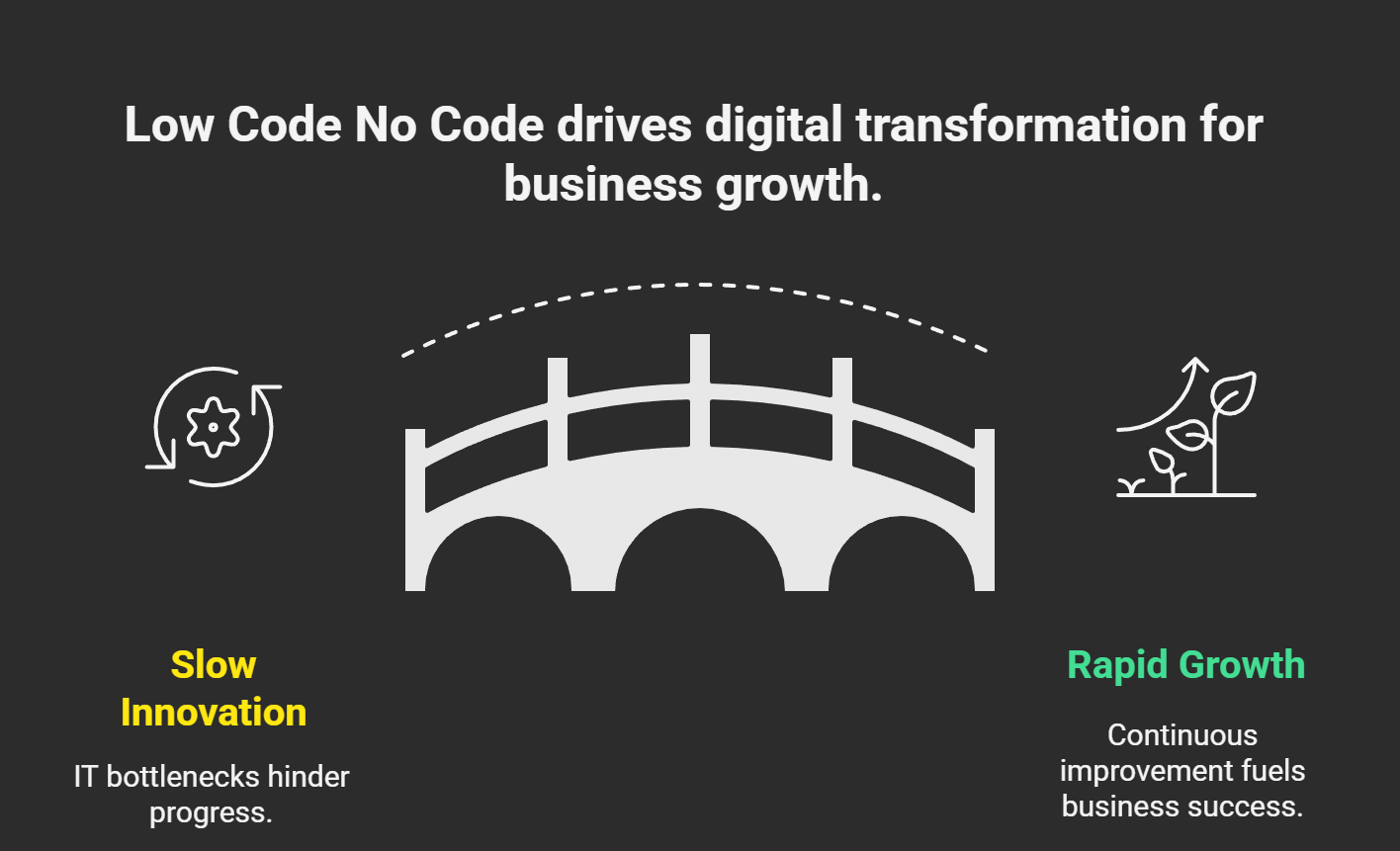
Low Code No Code is no longer a trend it’s a smart business strategy. Whether you’re a small business owner nervous about technology or a CTO focused on reducing costs, these platforms offer a practical, efficient path forward.
They simplify development, empower teams, and accelerate Digital Transformation without unnecessary complexity.

Our AI will analyze your requirements and match you with vetted developers from our global talent pool efficiently and accurately
Drag and drop your PDF or DOCX here, or click to browse
Supported formats: PDF, DOCX (Max 10MB)
Takes ~15 seconds · No signup required
Our AI neural network is processing your requirements across millions of data points
Extracting key requirements and technical specifications
Identifying required technologies, frameworks, and expertise levels
Scanning our global database of pre-screened professionals
Applying proprietary algorithm to find best-fit matches
Ranking and selecting top candidates for your review
AI-powered matching based on your requirements
Unlock full roster with detailed profiles, interview recordings, and salary expectations.
Fill in your details to unlock full candidate profiles and connect with top talent.
 Mobile App Development
 AI & ML
 IT Consulting
 Website Development
 Digital Transformation
 Software Development
 DevOps & Cloud Solutions
 Product Design & Ideation
 Hire Nodejs Developer
 Hire ReactJs Developer
 Hire AngularJs Developer
 Hire Flutter Developer
 Hire VueJs Developer
 Hire Android Developer
 Hire iOS Developer
 Hire Python Developer
 Hire DotNet Developer
 Hire Laravel Developer
 Hire PHP Developer
 Hire CodeIgniter Developer
 Hire Golang Developer
 Hire ROR Developer
 Hire SalesForce Developer


Comments (0)
No comments yet.
Leave Your Comment: