appzime | AppZime Technologies | Page 2 of 2

Custom Software Development Cost in India 2026: 10 Smart Budget Factors

Custom software development cost in India depends on far more than the number of screens or developers assigned to a project. A reliable estimate considers business workflows, technical architecture, integrations, security, testing, deployment and the long-term maintenance required after launch.

Businesses often ask for a single price before requirements are clear. That creates weak comparisons because two vendors may be estimating completely different products. A better approach is to understand the ten cost factors below and use them to build a scope that can be estimated transparently.

What Shapes Custom Software Development Cost in India?

The biggest variables are complexity, team composition and the amount of uncertainty in the requirement. A small internal workflow tool is not comparable to a multi-tenant SaaS product, ERP module or customer platform supporting payments and real-time integrations.

1. Business Process Complexity

Software becomes more expensive when it must model complicated approvals, exceptions, roles and business rules. Before development, map the current process and identify which steps truly need automation. Removing unnecessary complexity can lower both build and maintenance cost.

2. Number of User Roles

Every role adds permissions, screens, workflows and testing combinations. Customer, manager, administrator, partner and finance roles may all see different data or actions. Clear role definitions prevent permission logic from becoming an expensive late-stage surprise.

3. Web, Mobile or Multi-Platform Delivery

A browser-only internal tool can be simpler than a product that needs responsive web, Android and iOS experiences. Platform choices should follow real user behavior. Building three experiences when most users need one creates avoidable cost.

4. Backend and Database Architecture

Backend complexity grows with data volume, transaction rules, reporting, search, real-time updates and scaling requirements. Architecture should be sized for expected growth without overengineering an early-stage product.

5. Integrations and APIs

CRM, ERP, payment, identity, logistics and communication integrations can be major effort areas. Teams must handle authentication, API limits, error states, data mapping and third-party downtime. Each integration should have clear ownership and test cases.

6. UI and UX Requirements

Design cost depends on whether the software needs a straightforward business interface or a highly polished consumer product. Good UX reduces training and support cost, so design should not be treated only as decoration.

7. Security and Compliance

Authentication, authorization, encryption, audit logs and secure data handling must be planned early. Businesses processing regulated or sensitive information may also need formal reviews and documentation. OWASP provides useful secure-development references at OWASP.

8. QA and Test Automation

Testing cost rises with workflows, integrations, browsers, devices and user roles. Automated tests are especially useful for stable business-critical flows. Skipping QA can lower the initial quotation while increasing production risk.

9. Cloud, DevOps and Monitoring

Production software needs environments, deployment pipelines, logs, backups and monitoring. These capabilities improve reliability and make future releases easier. They should be included in the total product budget rather than treated as optional extras.

10. Maintenance and Product Evolution

Software changes after launch because users request improvements, libraries need updates and business rules evolve. Reserve capacity for maintenance, security and product iteration.

Custom Software Development Cost in India: A Better Estimation Model

Area Lower complexity Higher complexity
Users Few roles Many roles and approval levels
Data Simple CRUD records Large, connected or real-time datasets
Integrations Few standard APIs Many legacy or complex systems
Security Standard controls Regulated or sensitive workflows
Delivery Single web product Web plus mobile and admin portals

How to Reduce Cost Without Building a Weak Product

  1. Start with the business outcome, not a long feature list.
  2. Prioritize a focused first release.
  3. Prototype high-risk workflows before coding.
  4. Use proven components for commodity capabilities.
  5. Define acceptance criteria clearly.
  6. Keep architecture maintainable and observable.
  7. Measure real usage before expanding scope.

How to Compare Software Development Proposals

Do not compare price alone. Compare scope, assumptions, team structure, testing, security, source-code ownership, deployment, documentation and support. Ask each vendor what is explicitly excluded.

AppZime provides broader software and digital services for businesses planning custom platforms. If you are still defining the scope, a discovery phase can help turn business requirements into a buildable roadmap before a full development commitment.

When Staff Augmentation Can Be More Cost-Effective

Some companies already have product leadership and architecture but need more engineering capacity. In those cases, IT staffing can be an alternative to outsourcing the complete project.

FAQ

Can software cost be estimated from a feature list?

A feature list helps, but reliable estimates also need workflows, roles, integrations, quality expectations and non-functional requirements.

Should a business choose the cheapest development quotation?

Not automatically. A low quotation can exclude QA, security, documentation or maintenance that later becomes necessary.

Is an MVP always the cheapest option?

A focused MVP can reduce initial scope, but it should still be technically sound enough to learn from real users without creating avoidable rework.

Final Takeaway

The custom software development cost in India becomes predictable when scope, assumptions and quality expectations are explicit. Build the budget around business value, technical complexity and lifecycle ownership rather than a headline per-developer rate. Transparent planning at the beginning usually saves more money than aggressive cutting during development.

Claude Fable 5.1 Launch: 7 Powerful Enterprise AI Takeaways for 2026

Claude Fable 5.1 enterprise AI became a major September 1, 2026 update when Anthropic announced Claude Fable 5.1 and Claude Mythos 5.1 as its latest models for coding and knowledge work. For businesses, the announcement matters less because of the model name and more because it reflects a broader shift: AI systems are becoming more capable at long-running professional tasks, research, coding and structured knowledge work.

This article explains what the launch means for enterprise teams, where stronger models can create practical value, and what companies should evaluate before replacing existing AI workflows. The goal is not to chase every model release. It is to understand where a more capable model changes product possibilities, engineering effort, governance needs or total operating cost.

What Was Announced on September 1, 2026?

Anthropic’s newsroom described Claude Fable 5.1 and Claude Mythos 5.1 as its most advanced models for coding and knowledge work, with research capabilities that also point toward future scientific applications. The announcement adds another strong option for organizations comparing frontier AI models for software engineering, document analysis, research, internal assistants and agent-style workflows.

You can review Anthropic’s announcement in its official newsroom. As with any model release, businesses should evaluate capabilities using their own workloads rather than relying only on benchmark claims.

Why Claude Fable 5.1 Enterprise AI Matters

The important enterprise question is whether a new model can complete more work reliably with fewer corrections. If stronger reasoning improves first-pass quality, it can reduce review effort in coding, research and document-heavy tasks. If tool use becomes more dependable, businesses can also expand automation beyond simple question-answering.

That does not mean every company should migrate immediately. Production AI systems include prompts, retrieval, access controls, integrations, evaluation sets, monitoring and user workflows. Changing the model can improve one layer while introducing new cost, latency or behavior elsewhere.

1. Coding Assistants Can Move Toward Broader Engineering Tasks

AI coding tools are increasingly used for code generation, refactoring, test creation, documentation, debugging and repository exploration. More capable models can potentially handle larger contexts and more connected tasks, but enterprises still need code review, automated testing and clear permissions.

Teams considering a new coding model should test it on their own repository patterns, frameworks, languages and security constraints. A model that performs well on public coding benchmarks may still behave differently inside a complex enterprise codebase.

2. Knowledge Work Can Become More Structured

Knowledge workers often spend time reading documents, comparing policies, extracting requirements, preparing summaries and building first drafts. Stronger models can help organize this work, but the enterprise value comes from connecting AI to trusted information and defining what should happen when sources conflict.

A useful implementation combines retrieval, citations, role-based access and human review. AppZime’s broader technology services can support organizations designing AI-enabled workflows that connect software, data and business processes.

3. Research Workflows Need Better Source Discipline

Anthropic highlighted research capabilities, which is important because AI research assistants are moving from simple web summaries toward multi-step information gathering and analysis. The risk is that a more confident answer can still be wrong if sources are weak or the system does not preserve evidence.

Enterprise research tools should retain links, timestamps, document references and confidence signals. High-impact decisions should never depend on unattributed generated text alone.

4. Model Evaluation Becomes a Business Requirement

As model choices multiply, organizations need repeatable evaluation. A practical evaluation set may include real customer questions, code tasks, support cases, internal policy queries and edge cases that previously caused errors.

Measure more than output quality. Track completion rate, human correction rate, latency, cost, tool failures and safety incidents. The best model for one workflow may not be the best model for another.

5. Agentic Workflows Need Strong Permissions

More capable models are often paired with tools that can search databases, update tickets, write code, create documents or trigger business actions. That increases potential productivity, but it also increases the importance of permission design.

Use least-privilege access. Separate read actions from write actions. Require approval for sensitive changes. Log important actions. A model should never receive broad access simply because it can technically use many tools.

6. Cost Should Be Measured Per Useful Outcome

Model pricing alone does not determine business value. A more expensive model can be cheaper overall if it completes tasks with fewer retries or less human correction. The opposite can also happen when a premium model is used for simple classification or extraction that a smaller model can handle efficiently.

A good architecture routes work based on complexity. Simple tasks can use smaller systems while difficult reasoning or coding can use stronger models.

7. Enterprises Should Avoid Model Lock-In

The pace of model releases makes portability valuable. Businesses should separate business logic, data retrieval, permissions and workflow rules from a single model provider where practical. This does not require building an overly abstract system, but it does mean avoiding unnecessary dependencies that make evaluation or migration difficult.

Area What to test Business question
Coding Repository tasks, tests, debugging Does it reduce review effort?
Research Source quality and citation accuracy Can teams trust the evidence trail?
Knowledge work Document comparison and extraction Does it save meaningful time?
Agents Tool selection and error handling Can actions stay inside approved boundaries?
Operations Latency, cost and failure rate Is the workflow economical at scale?

How Businesses Should Test Claude Fable 5.1 Enterprise AI

  1. Select two or three workflows with measurable outcomes.
  2. Create a test set from real historical tasks.
  3. Compare quality against your current model.
  4. Measure human correction time, not only model scores.
  5. Test failure cases and ambiguous instructions.
  6. Review permissions before enabling tool use.
  7. Run a limited pilot before production rollout.

Where AppZime Can Help

AI adoption usually requires more than selecting a model. Businesses need interfaces, APIs, data connections, monitoring and secure production deployment. AppZime can support digital product development through its services, while organizations looking for additional engineering capacity can also explore IT staffing.

The strongest AI projects begin with a business workflow and measurable outcome. Model selection should follow that requirement, not lead it.

FAQ

Should every business switch to Claude Fable 5.1?

No. Organizations should compare it against current tools using real workloads, cost and operational requirements.

Is a better model enough for enterprise AI?

No. Data quality, permissions, integrations, evaluation, monitoring and human review are equally important.

What is the best first use case?

Choose a repetitive knowledge or engineering workflow where time, quality and correction effort can be measured clearly.

Final Takeaway

The Claude Fable 5.1 enterprise AI launch is another signal that frontier models are moving deeper into coding, research and professional knowledge work. Businesses can benefit, but the winning approach is disciplined evaluation: test real tasks, measure complete workflow economics, restrict tool permissions and deploy only where the new capability creates measurable value.

Healthcare App Development Guide: How to Build Secure & Scalable Digital Health Solutions in 2026

The Rise of Healthcare Apps in a Digital-First World

The healthcare industry is rapidly shifting toward digital-first patient care, and mobile apps are playing a critical role in this transformation. From virtual doctor consultations to real-time patient monitoring, healthcare apps are improving accessibility, efficiency, and outcomes across the medical ecosystem.

At AppZime, we help healthcare providers, startups, and enterprises design and build secure, scalable, and compliant healthcare applications that meet modern patient expectations and regulatory standards.

This guide explains how to build a healthcare app from scratch, covering app types, development steps, essential features, compliance requirements, cost estimates, and future trends.

What Is Healthcare Application Development?

Healthcare application development is the process of designing and building mobile or web applications that support medical services, patient care, health monitoring, diagnostics, and healthcare management.

These apps can be used by:

  • Patients
  • Doctors and clinicians
  • Hospitals and healthcare organizations
  • Insurance providers
  • Wellness and fitness users

Types of Healthcare Apps You Can Build

Understanding the type of healthcare application you want to build is the first and most important step.

1. Patient-Centric Healthcare Apps

These apps focus on improving patient experience and engagement.

Examples:

  • Telemedicine & video consultation apps
  • Appointment booking apps
  • Medication reminder apps
  • Health tracking & wellness apps

2. Doctor & Provider Apps

Designed to support clinicians and healthcare professionals.

Examples:

  • Electronic Health Records (EHR/EMR) apps
  • Clinical decision support systems
  • Secure messaging platforms
  • Prescription management apps

3. Remote Patient Monitoring Apps

These apps collect real-time health data using wearable devices and sensors.

Common use cases:

  • Chronic disease management
  • Post-surgery monitoring
  • Elderly patient care

4. Healthcare Management & Enterprise Apps

Used by hospitals and healthcare organizations to streamline operations.

Examples:

  • Hospital management systems
  • Medical billing & insurance apps
  • Healthcare CRM platforms

Healthcare App Development Process at AppZime

Building a healthcare app requires a structured and compliant approach.

Step 1: Idea Validation & Market Research

  • Identify the problem your app solves
  • Research competitors and target users
  • Define success metrics

Step 2: Compliance & Regulatory Planning

Healthcare apps must comply with regulations such as:

  • HIPAA (USA)
  • GDPR (EU)
  • Local healthcare data protection laws

Security planning begins before development, not after.

Step 3: Feature Definition & Technical Architecture

  • Decide must-have vs optional features
  • Select cloud infrastructure and APIs
  • Plan data storage and encryption

Step 4: UI/UX Design for Healthcare Users

Healthcare apps must be:

  • Simple
  • Accessible
  • Intuitive for all age groups

UX mistakes can directly affect patient safety.

Step 5: App Development (MVP First)

At AppZime, we recommend starting with an MVP (Minimum Viable Product)to:

  • Reduce cost
  • Validate features
  • Collect real user feedback

Step 6: Quality Assurance & Security Testing

  • Functional testing
  • Performance testing
  • Penetration and vulnerability testing

Step 7: Launch, Maintenance & Updates

Healthcare apps require continuous updates, security patches, and performance monitoring.

Real-World Proof of Secure & Scalable Healthcare Solutions

At AppZime, our approach to healthcare app development is grounded in real-world execution. In a recent engagement with a leading UK healthcare provider, we implemented a comprehensive digital health solution that unified fragmented patient data, ensured strict GDPR and NHS compliance, and delivered a secure, patient-centric experience at scale. By integrating multiple EMR systems into a single, compliant ecosystem and automating critical workflows, the solution significantly improved operational efficiency, care coordination, and patient outcomes demonstrating how thoughtfully built healthcare platforms can drive measurable impact when security, scalability, and compliance are embedded from day one.

Must-Have Features in a Healthcare Applications

Core Features for Most Healthcare Apps

  • Secure user authentication
  • User profiles (patients & doctors)
  • Appointment scheduling
  • In-app notifications
  • Data encryption

Advanced Features

  • Video consultations
  • AI-powered symptom checker
  • Wearable device integration
  • Real-time health analytics
  • Cloud-based data storage

Security & Compliance: A Non-Negotiable Requirement

Healthcare apps deal with highly sensitive personal data, making security critical.

Best Practices for Healthcare App Security

  • End-to-end encryption
  • Role-based access control
  • Secure cloud infrastructure
  • Regular security audits
  • Compliance documentation

Failure to comply with regulations can result in heavy penalties and loss of trust.

Healthcare App Development Cost & Timeline

The cost of healthcare app development depends on complexity, features, and compliance requirements.

App ComplexityEstimated CostTimeline
Basic App$25,000 – $40,0002–3 months
Mid-Level App$50,000 – $90,0004–6 months
Advanced App$100,000+6–9 months

At AppZime, we help clients optimize costby prioritizing features and building scalable MVPs.

  • AI-driven diagnostics
  • Predictive healthcare analytics
  • IoT-powered patient monitoring
  • Integration with wearable devices
  • Personalized digital health experiences

Healthcare apps are moving from reactive care to preventive and predictive care.

Why Choose AppZime for Healthcare App Development?

At AppZime, we specialize in:

  • HIPAA-compliant healthcare solutions
  • Scalable mobile & web applications
  • UX-focused healthcare design
  • Secure cloud-based architectures

Whether you’re a startup or an enterprise, our team ensures your healthcare app is secure, compliant, and future-ready.

Final Thoughts

Healthcare app development is more than just building an app it’s about building trust, security, and reliability. With the right strategy, technology stack, and development partner, healthcare apps can dramatically improve patient outcomes and operational efficiency.

If you’re planning to build a healthcare app, AppZime is here to help you every step of the way.

How AI-First Apps Are Redefining User Expectations in 2026

The Shift from App-First to AI-First

In 2026, users no longer evaluate applications based solely on features or visual design. They judge apps by how intelligently they anticipate needs, reduce effort, and deliver outcomes. This shift has given rise to AI-first applications products designed with artificial intelligence at their core, not as an afterthought.

For B2B and enterprise organizations, this evolution is critical. Customers, employees, and partners now expect apps to think, learn, and act proactively. Businesses that fail to adapt risk falling behind competitors that deliver faster, smarter, and more personalized digital experiences.

Ship from app first to visual selection

What Does “AI-First” Really Mean in 2026?

An AI-first app is built around intelligence from day one. Unlike traditional apps that add AI features later, AI-first products use machine learning, natural language processing, and predictive analytics as foundational components.

Key characteristics of AI-first applications include:

  • Decision-making powered by data, not static rules
  • Continuous learning from user behavior
  • Real-time personalization at scale
  • Automation embedded into core workflows 

In enterprise environments, this translates into applications that optimize operations, guide users, and reduce manual intervention across the organization.

Why User Expectations Have Changed So Rapidly

The widespread adoption of generative AI across business tools has fundamentally reshaped expectations. Users now assume that software should:

  • Understand intent, not just commands
  • Deliver answers instantly
  • Improve with every interaction

For enterprises, this means internal users expect the same intelligence from business apps that they experience in consumer technology. Software is no longer just a tool it is a digital assistant.

Key Ways AI-First Apps Are Redefining User Expectations

Hyper-Personalization Is Now the Standard

In 2026, personalization goes far beyond dashboards and recommendations. AI-first apps adapt workflows, interfaces, and content in real time based on role, behavior, and context.

Enterprise example:
A global CRM platform uses AI to dynamically adjust sales pipelines for each representative, recommending next-best actions based on deal history, customer sentiment, and market signals. Productivity increases without additional training or manual configuration.

Proactive Experiences Replace Reactive Interfaces

Users no longer want to search for insights they expect insights to come to them. AI-first apps predict needs and trigger actions automatically.

Enterprise example:
A supply chain management system forecasts inventory shortages weeks in advance and automatically initiates supplier negotiations. Teams move from firefighting to strategic planning.

Conversational Interfaces Become the Primary Interaction Layer

Natural language is rapidly replacing complex menus and workflows. Chat-based and voice-driven interfaces allow users to interact with enterprise systems intuitively.

Enterprise example:
Finance teams use conversational AI to query real-time cash flow, generate reports, or run forecasts simply by asking questions eliminating dependency on technical dashboards.

Continuous Learning Becomes a Core Expectation

AI-first apps are expected to improve without constant updates or retraining. Users assume software will learn from patterns and adapt automatically.

Enterprise example:
HR platforms refine talent recommendations by analyzing hiring outcomes, employee performance, and retention data improving candidate quality over time.

Frictionless Experiences Drive Adoption

In enterprise software, usability directly impacts ROI. AI-first design minimizes steps, reduces cognitive load, and automates repetitive actions.

Enterprise example:
An AI-powered IT service desk resolves common issues automatically, reducing ticket volumes and freeing IT teams to focus on high-impact initiatives.

Key Ways AI-First Apps Are Redefining User Expectations

The New Benchmarks Users Expect from AI-First Apps

In 2026, enterprise users evaluate apps against new standards:

  • Speed: Real-time responses and instant insights
  • Accuracy: Reliable outputs backed by data
  • Transparency: Clear explanations for AI-driven decisions
  • Control: The ability to override or guide automation 

Meeting these benchmarks is no longer optional it defines product credibility.

Trust, Ethics, and Privacy in AI-First Enterprise Apps

As intelligence increases, so does responsibility. Enterprises must ensure AI systems are:

  • Secure by design
  • Compliant with global regulations
  • Explainable and auditable 

Users expect transparency around data usage and decision logic. Trust is now a competitive advantage in enterprise software.

How Businesses Can Adapt to AI-First User Expectations

To succeed in 2026, organizations must rethink how they build and evolve applications:

  • Design workflows around intelligence, not screens
  • Invest in scalable AI-ready architectures
  • Align UX teams and data science teams from day one
  • Focus on outcomes rather than features 

AI-first is as much a strategic shift as it is a technical one.

Common Mistakes Enterprises Make When Going AI-First

Many organizations struggle by:

  • Adding AI without a clear business objective
  • Over-automating and removing user control
  • Ignoring change management and user trust 

Successful AI-first apps prioritize value, clarity, and usability over complexity.

Mistakes Enterprises Make When Going AI-First

What the Future Holds Beyond 2026

Looking ahead, AI-first apps will evolve into:

  • Autonomous systems that manage end-to-end workflows
  • Emotion-aware interfaces that adapt tone and interaction
  • Digital companions embedded across enterprise ecosystems 

The line between software and intelligent assistant will continue to blur.

How AppZime Helps Enterprises Build AI-First Applications

At AppZime, we help organizations transition from traditional digital products to AI-first enterprise solutions by:

  • Defining AI-driven product strategies
  • Designing intelligent, user-centric experiences
  • Building scalable, secure, and future-ready architectures 

Our focus is not just on adding AI but on delivering measurable business outcomes.

AI-First Is No Longer Optional

In 2026, AI-first apps define the new baseline for enterprise software. User expectations have evolved, and intelligent experiences are now a requirement not a differentiator.

Organizations that embrace AI-first thinking today will lead tomorrow’s digital economy. Those that don’t risk becoming irrelevant in a world where software is expected to think, learn, and act.

Low Code No Code: A Simple, Powerful Way to Build Digital Solutions Faster

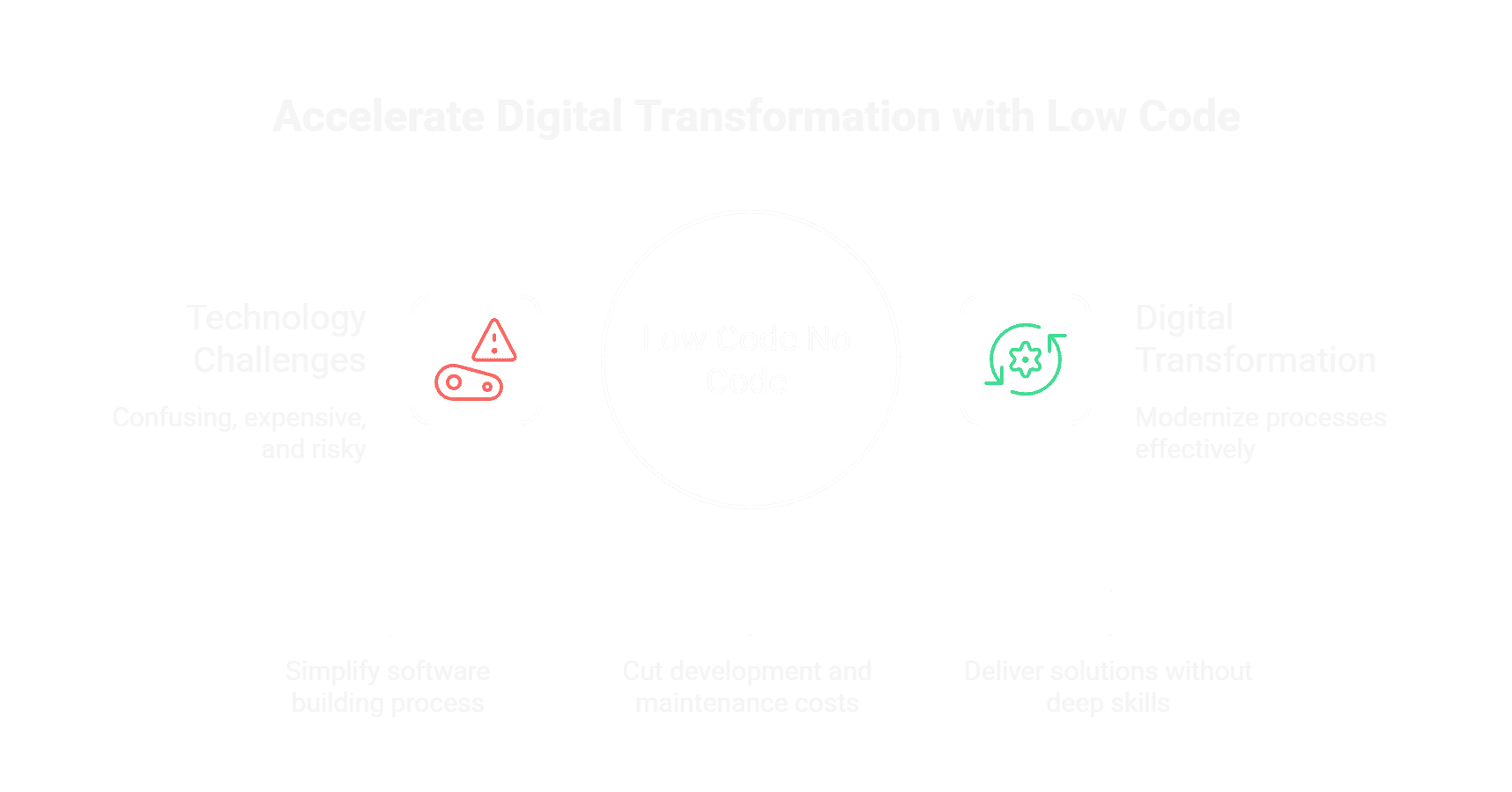
In today’s fast-changing business world, technology is no longer optional it is essential. But for many small business owners, technology feels confusing, expensive, and risky. On the other hand, CTOs and IT leaders are under constant pressure to deliver faster while cutting costs.

This is where Low Code No Code comes in.

These modern development approaches are changing how software is built. They reduce complexity, save money, and help businesses move faster without deep technical skills. More importantly, they play a major role in Digital Transformation, helping organizations modernize processes without overwhelming their teams.

In this blog, we will break everything down in very simple terms what it means, how it works, real use cases, pros and cons, and the best platforms available today.


What is Low Code No Code(LCNC)?

LCNC refers to software development methods that allow users to create applications with minimal or no traditional coding.

Low Code

Low code tools require some coding but much less than traditional development. They are ideal for IT teams and developers who want speed and flexibility.

No Code

No code tools require zero coding. They are designed for business users, often called a citizen developer, who can build apps using a drag-and-drop interface and visual programming.

Both approaches rely heavily on:

  • Visual workflows
  • Pre-built templates
  • Reusable components
  • Easy API integration

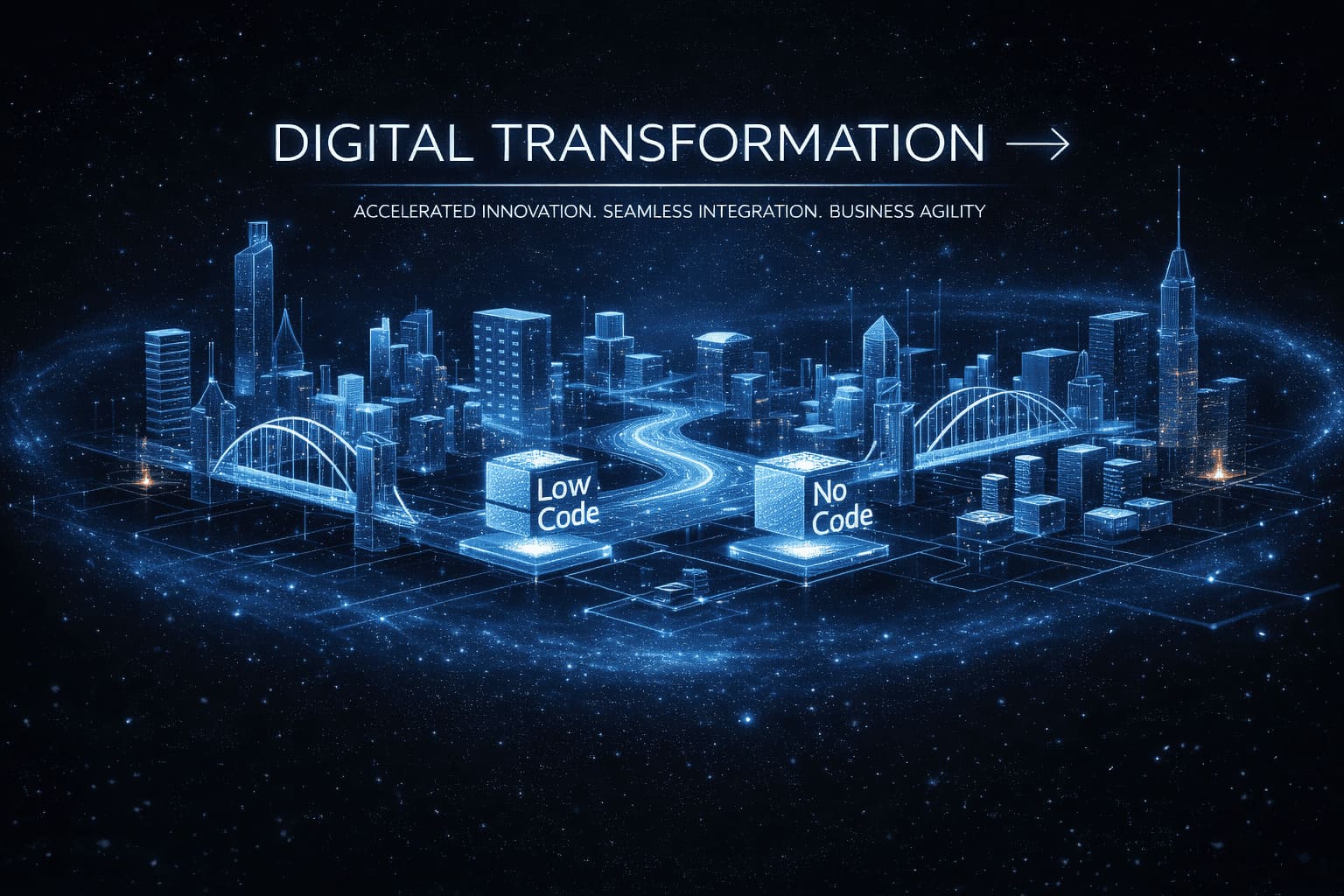
low code no code strcuture

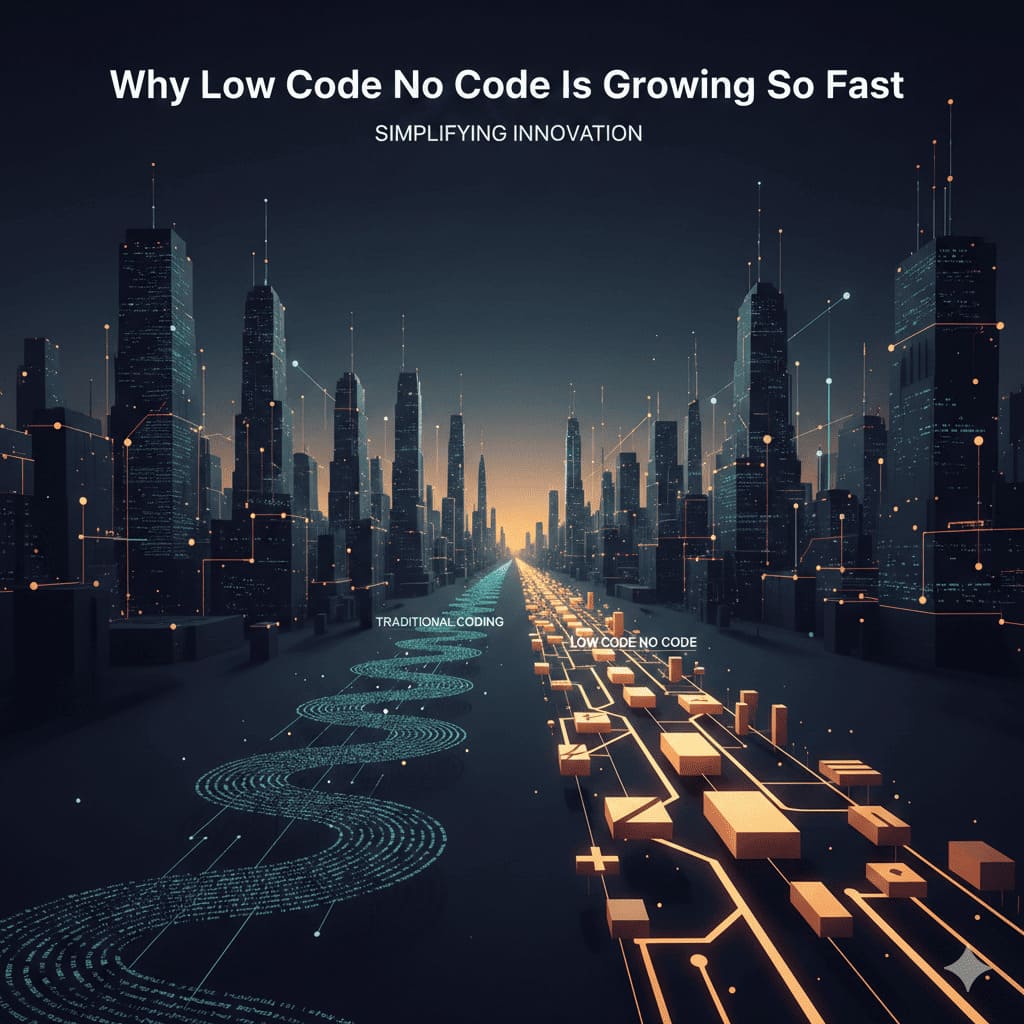
Why Low Code No Code Is Growing So Fast

According to Gartner, by 2025, 70% of new applications will be built using low code or no code technologies, up from less than 25% in 2020.
Another Forrester report states that no-code platforms are growing at over 40% year-over-year, making them one of the fastest-growing segments in software development.

Why? Because businesses want:

  • Faster delivery
  • Lower development costs
  • Less dependency on hard-to-find developers

Why low code no code is growing so fast

Who Should Use Low Code No Code?

Small Business Owners (Afraid of Tech)

If technology feels intimidating, these platforms are built for you. You can:

  • Create simple apps without coding
  • Automate manual work
  • Test ideas quickly without large budgets

CTOs and IT Leaders (Cost-Focused)

For CTOs, Low Code No Code helps:

  • Reduce development backlogs
  • Lower engineering costs
  • Improve team productivity
  • Accelerate Digital Transformation initiatives

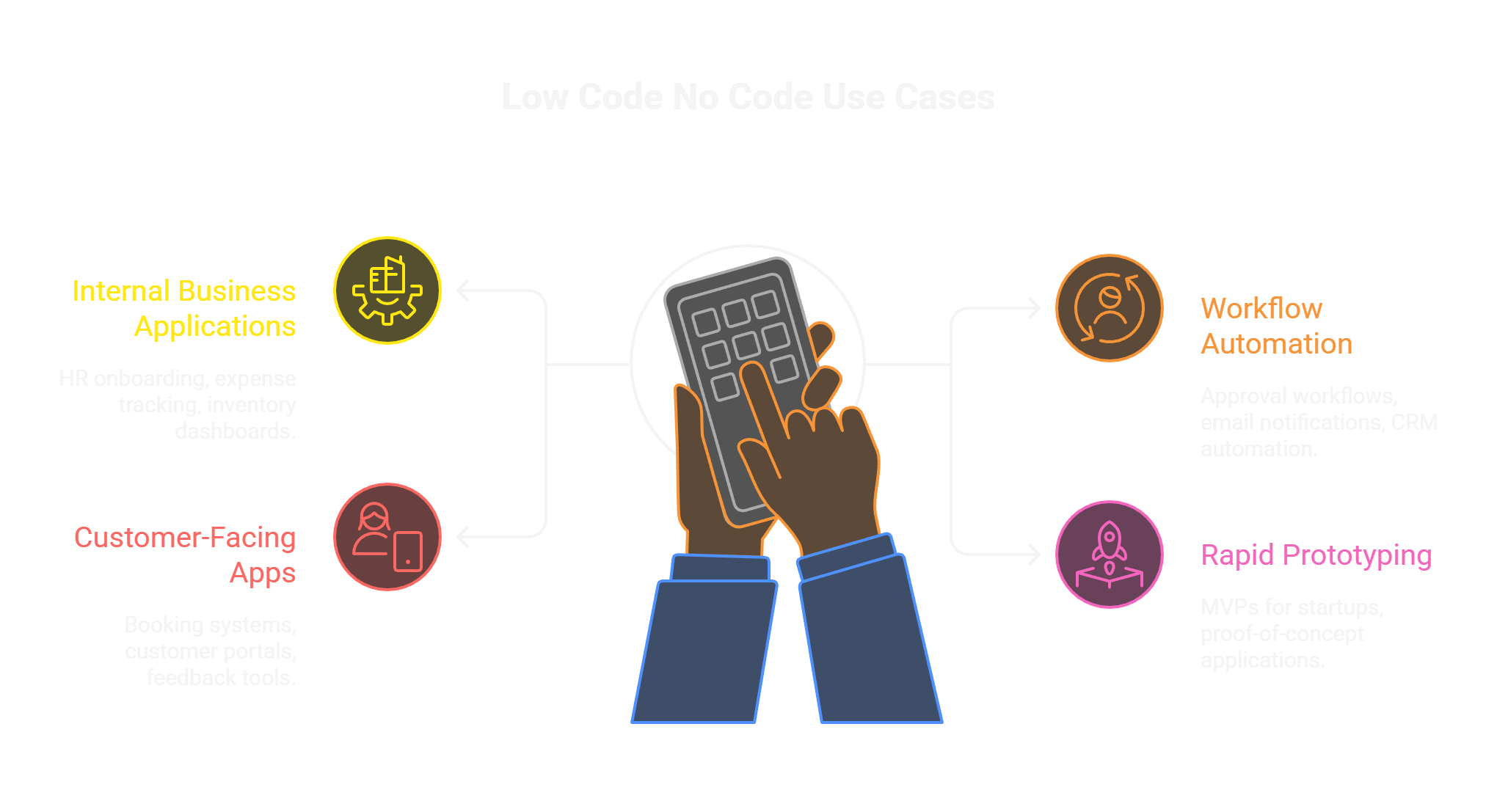
Common Use Cases of Low Code No Code

Here are real-world examples where these platforms shine:

Internal Business Applications

  • HR onboarding systems
  • Expense tracking apps
  • Inventory management dashboards

Workflow Automation

  • Approval workflows
  • Email notifications
  • CRM process automation

Customer-Facing Apps

  • Booking systems
  • Customer portals
  • Feedback and survey tools

Rapid Prototyping

  • MVPs for startups
  • Proof-of-concept applications

Common uses of low code no code

Pros of Low Code No Code Platforms

Faster Development

  • Apps can be built 10x faster than traditional methods.

Lower Costs

  • Less coding means fewer developer hours and reduced maintenance.

Empower Citizen Developers

  • Business users can solve problems themselves without waiting for IT.

Easy Integration

  • Most platforms support built-in API integration with popular tools.

Supports Digital Transformation

  • They enable quick modernization without massive infrastructure changes.

Cons of Low Code No Code Platforms

Limited Customization

  • Highly complex logic may still need traditional coding.

Vendor Lock-In

  • Switching platforms later can be challenging.

Performance Constraints

  • Not ideal for extremely high-scale or real-time systems.

Governance Challenges

  • Without proper controls, too many apps can create chaos.

Best Low Code Development Platforms (And Why They Stand Out)

OutSystems

  • Enterprise-grade performance
  • Strong security and scalability
  • Excellent for complex business apps

Mendix

  • Backed by Siemens
  • Powerful visual programming tools
  • Ideal for large-scale Digital Transformation projects

Microsoft Power Apps

  • Seamless integration with Microsoft ecosystem
  • Cost-effective for existing Microsoft users

Best No Code Platforms (And Why They Are Popular)

Bubble

  • Highly flexible no-code builder
  • Great for startups and MVPs

Webflow

  • Best for responsive websites
  • Designer-friendly interface

Airtable

  • Combines spreadsheets with database power
  • Perfect for internal tools and workflows

These platforms are considered the best because they balance ease of use, scalability, and strong community support.

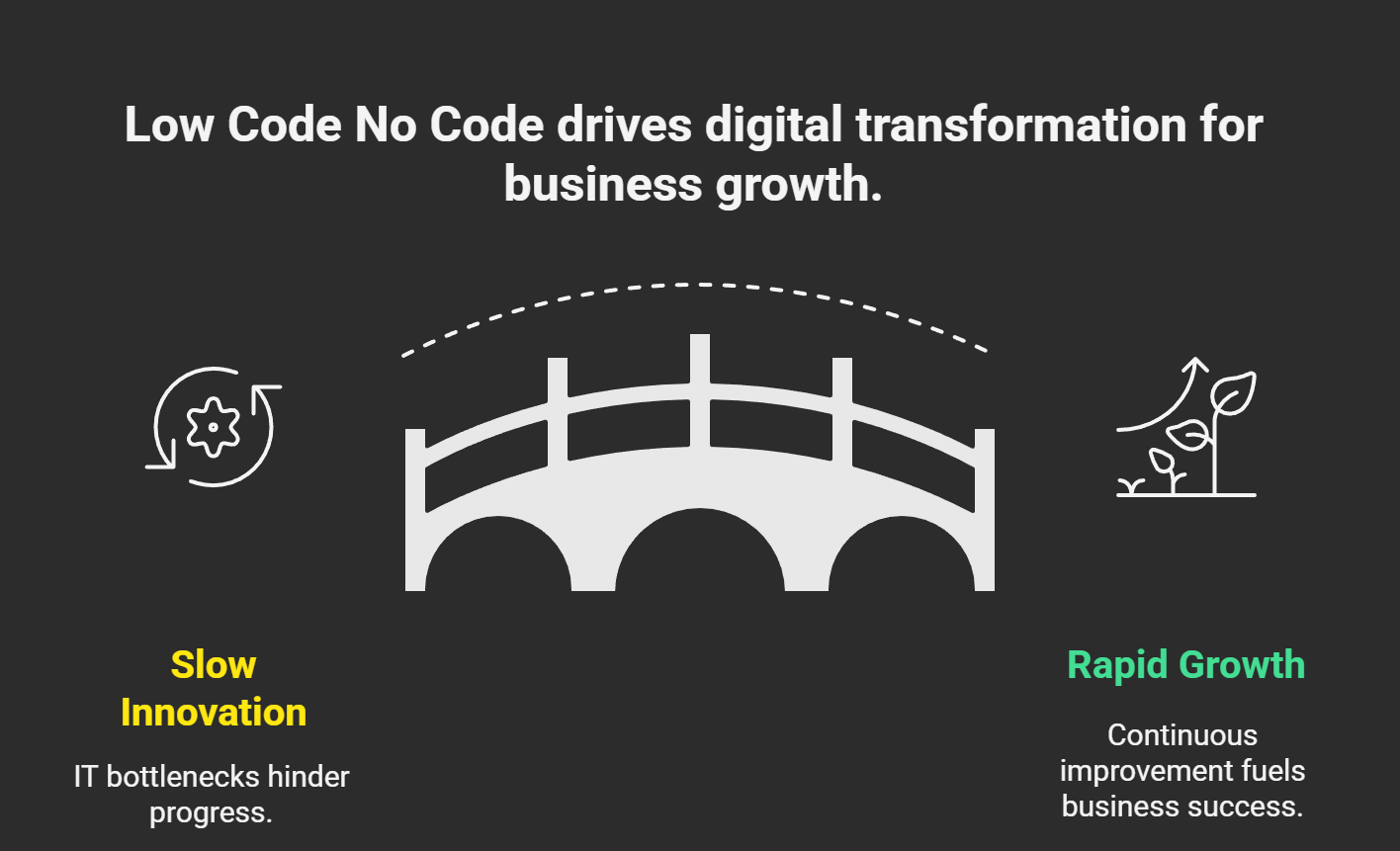
How Low Code No Code Supports Digital Transformation

Digital Transformation is not just about technology it’s about changing how businesses operate. Low Code No Code enables:

  • Faster innovation cycles
  • Better collaboration between business and IT
  • Continuous improvement without major disruptions

This makes them powerful enablers of long-term growth.

How Low Code No Code Supports Digital Transformation

Why Low Code No Code Is a Smart Business Move

Low Code No Code is no longer a trend it’s a smart business strategy. Whether you’re a small business owner nervous about technology or a CTO focused on reducing costs, these platforms offer a practical, efficient path forward.

They simplify development, empower teams, and accelerate Digital Transformation without unnecessary complexity.

Frequently Asked Questions

Q1. Is Low Code No Code secure?
A1. Yes, most leading platforms follow enterprise-grade security standards.
Q2. Can non-technical users really build apps?
A2. Absolutely. That’s why the term citizen developer exists.
Q3. Are these platforms scalable?
A3. Low code platforms scale very well; no code platforms are best for small to mid-scale apps.
Q4. Will they replace developers?
A4. No. They complement developers by reducing repetitive work.
Q5. Is Low Code No Code suitable for my business?
A5. If you want faster results with lower risk, the answer is yes.
Appzime Logo

Tell us what kind of developer you need

Our AI will analyze your requirements and match you with vetted developers from our global talent pool efficiently and accurately

Upload Job Description

Drag and drop your PDF or DOCX here, or click to browse

Supported formats: PDF, DOCX (Max 10MB)

Takes ~15 seconds · No signup required

AI Neural Matching Engine
Signals extracted: 0

Intelligent Talent Matching

Our AI neural network is processing your requirements across millions of data points

Analyzing job description

Extracting key requirements and technical specifications

Extracting skills and experience

Identifying required technologies, frameworks, and expertise levels

Searching vetted developer profiles

Scanning our global database of pre-screened professionals

Matching candidates with requirements

Applying proprietary algorithm to find best-fit matches

Shortlisting best-fit developers

Ranking and selecting top candidates for your review

Neural Match

Matched Developers

AI-powered matching based on your requirements

AI VERIFIED
4 Candidates Matched
Analyzing requirements...

AI Extracted Requirements

Your Requirements

Need More Candidates?

Unlock full roster with detailed profiles, interview recordings, and salary expectations.

Appzime Logo

Get Instant Candidate Access

Fill in your details to unlock full candidate profiles and connect with top talent.

Detailed JD helps us match better candidates
appzime | AppZime Technologies | Page 2 of 2